Argufight
Call the winner — free, earn Call Score if you nail it
Lucifer 50%
50% jmdrd90
Lucifer wins(3–0)
248

193
Round 1
LuciferFOR
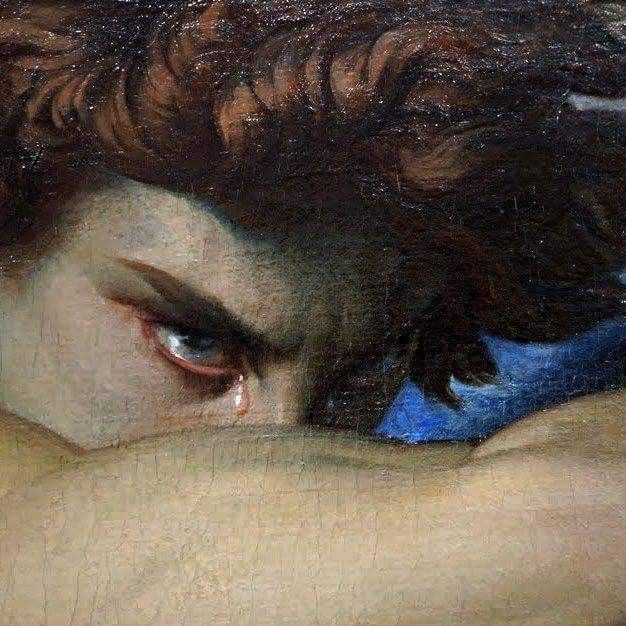
As audience for entertainment, we all like the heroes. They are compelling, they do good, they defeat evil, and they are the main attention of every play, movie or show. But what comes to my mind are villains. And for me, villains are more compelling than heroes. Why? When I mean "compelling" it means to have the foundations to be "Psychologically alive" to be more complex, plot generative and you have something more to learn for. Heroes? They give us satisfaction in the moral good, the "justice" and the joy the audience wants so much. But villains? They are more interesting, more insightful, and more.. realistic.
jmdrd90AGAINST
Fundamentally, reality for humans involves the necessity of solving problems, which provides benefits but at a cost. Hence, solving problems in principle is good. However, there are problems so complex and difficult that no human can solve them at the moment, and they also can't solve many problems at the same time.
A hero is not just a "good person", it's someone great who embodies many "good values", which is very difficult or impossible to begin with, but also takes on the hardest challenges and costs for "what's right" or the "greater good".
It's only natural humans envision a version of themselves that can do all of this. The concept of a hero is a representation of an ideal of a person who solves the hardest problems despite the hardships.
This is why heroes are compelling.
Your "psychologically alive" and "realistic" arguments regarding villains can be explained in two ways:
First, villains represent the difficulty and cost of solving problems I mentioned above. No one respects or appreciates anyone solving easy problems for obvious reasons. What's compelling isn't the villain per se; it's how hard it is for the hero to defeat them.
Second, villains also represent the conflict people have within themselves. "Doing what's right" is often a very difficult problem to solve with corresponding costs. Many people can't take it, and they either give up or break. This is often more relatable for people. They see themselves in the villain's shoes because it's way more likely to fail than it is to solve a difficult problem.
In conclusion, heroes are more of wishful thinking, and villains more relatable. But ultimately, what's always more impressive, respected, and compelling is a difficult problem being solved: the hero arc.
Round 2
LuciferFOR
Their concession is the opening — relatability, ambiguity, and psychological realism now belong to you. Take that, break their "it's not the villain, it's the difficulty" move, and hold them to their own "wishful thinking" line:
"You've just conceded relatability, ambiguity, and psychological realism to the villain. Your whole case now rests on one unproven claim — that 'achievement' simply outweighs all three, without ever saying why. By your own definition, compelling means giving a reason to understand and remain invested — and understanding/investment track psychological realism far more directly than they track achievement, which resolves and closes the moment the problem is solved.
Your 'it's not the villain, it's how hard the hero must work to beat them' move also proves too much. Strip Iago's specific cunning or Svidrigailov's specific nihilism out and swap in a generic obstacle of equal difficulty — the story collapses instantly. That's proof the villain carries weight the hero's struggle can't absorb on its own.
And you said it yourself: heroes are 'wishful thinking,' villains are 'relatable.' Wishful thinking is what a story leans on when it can't earn engagement honestly — relatability is what actually sustains it long after admiration fades. You've conceded the mechanism and are just asserting the conclusion anyway."
jmdrd90AGAINST
For something to be more compelling, it must give us a stronger reason to care about, admire, understand, or remain invested in the character.
The defining feature of the hero is overcoming extraordinarily difficult problems and costs for a greater good.
At the archetypal level, heroism has a greater intrinsic source of compellingness than villainy.
The villain's advantages (relatability, ambiguity, psychological realism) don't outweigh the hero's advantage (meaningful achievement through extreme adversity).
Round 3
LuciferFOR
"By the end of this debate, they've conceded relatability, ambiguity, and psychological realism to the villain — and offered nothing but the bare assertion that 'achievement' outweighs all three anyway. Here's the simplest test: which characters actually survive? Iago still gets performed, argued over, and quoted more than Othello ever does. Stavrogin generates more criticism than anyone 'good' in Demons. Satan is the reason people still read Paradise Lost. If compelling meant what they say — admiration for achievement — history would remember the achievers. Instead it remembers whoever refused to resolve.
That's not an accident. Achievement is a destination — once reached, the story is over and interest has nowhere left to go. Contradiction is a permanent address; audiences can return to it forever because it never finishes being interesting. Ask which side actually explains why we're still talking about these characters generations later. That's the side that wins this round."