Beginner’s Guide to Competitive Online Debating
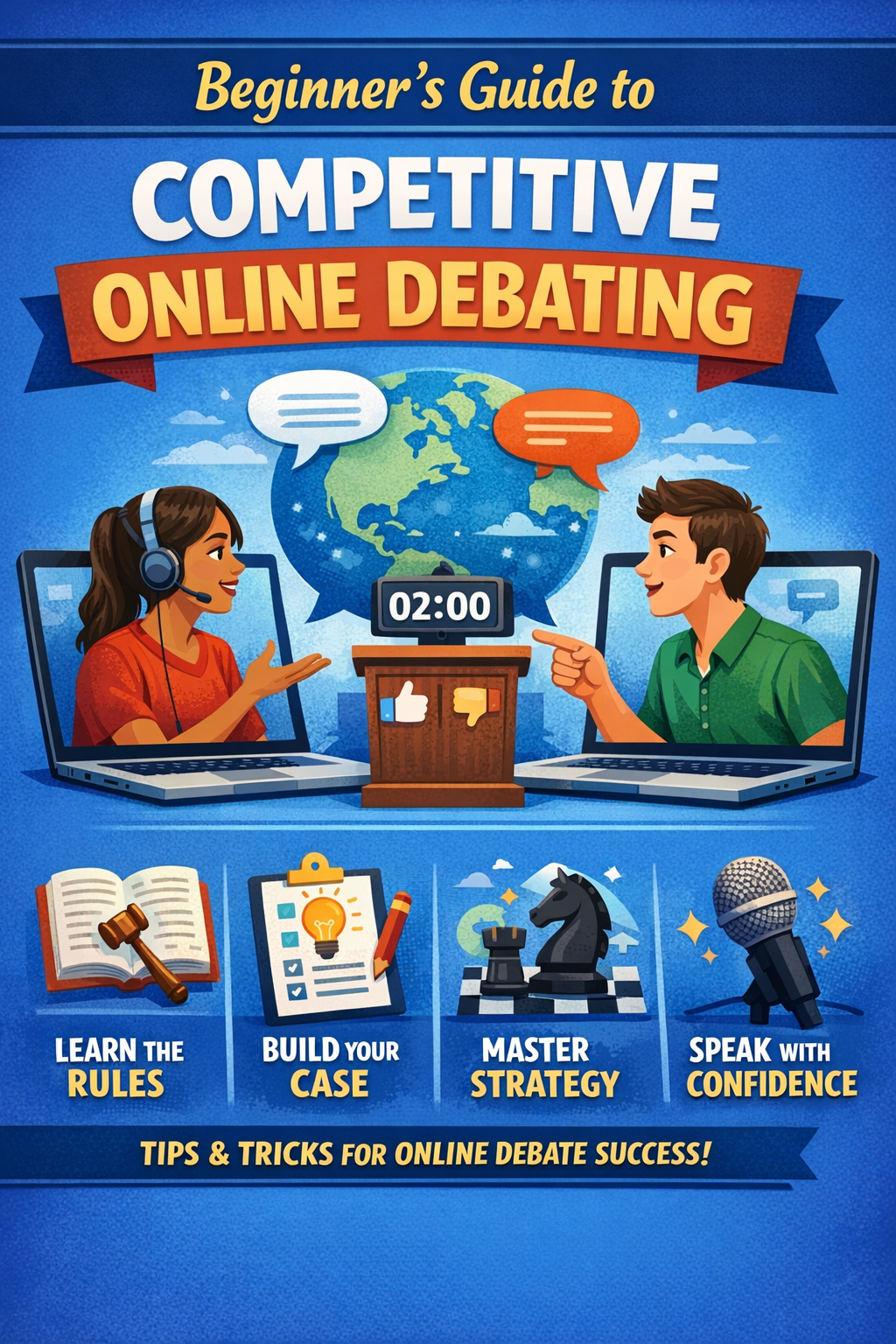
Competitive online debating has exploded in popularity, opening the doors for beginners to test their reasoning skills against opponents from around the world. This guide walks you through everything you need to know to get started—from formats and platforms to skills, strategy, and common mistakes—so you can compete confidently and improve fast.
The Rise of Competitive Online Debating
Debate is no longer confined to classrooms, lecture halls, or tournament auditoriums. With the growth of digital platforms, competitive debating has moved online—bringing together students, professionals, hobbyists, and thinkers from across the globe. What once required travel, formal teams, and institutional backing can now be accessed with a laptop, a microphone, and a willingness to argue thoughtfully.
For beginners, online debating offers a unique opportunity. You can face diverse opponents, receive instant feedback, review recordings of your performance, and improve rapidly. At the same time, the environment can feel intimidating: fast-paced exchanges, experienced debaters, unfamiliar formats, and public scoring.
This beginner’s guide is designed to demystify competitive online debating. It explains how online debate works, what skills matter most, how to prepare, and how to avoid the most common beginner mistakes. Whether your goal is academic success, personal growth, or simply the thrill of intellectual competition, this guide will help you take your first confident steps.
1. What Is Competitive Online Debating?
Competitive online debating is a structured form of argumentation conducted through digital platforms. Participants argue opposing sides of a motion under agreed-upon rules, time limits, and evaluation criteria. Judges—human, AI-assisted, or mixed—score performances based on logic, evidence, clarity, and engagement.
Unlike casual online arguments, competitive debating emphasizes:
Clear structure
Respectful engagement
Time management
Evidence-based reasoning
The “competitive” element means outcomes matter. Rankings, scores, ratings, and reputations are often on the line, even in informal leagues.
2. Popular Online Debate Formats Beginners Should Know
Understanding formats is crucial because each one rewards different skills. Beginners often struggle not because they argue poorly, but because they misunderstand the format.
British Parliamentary (BP)
Four teams of two speakers
Short preparation time
Emphasis on comparative analysis
BP is common in online university circuits and can be challenging for beginners due to its speed and complexity.
Lincoln-Douglas (LD)
One-on-one debate
Focus on values and philosophy
Structured speeches and rebuttals
LD is beginner-friendly for those who enjoy ethical reasoning and direct clash.
Policy Debate
Team-based
Evidence-heavy
Longer rounds
Policy debates online reward research skills but can overwhelm new debaters.
Open Platform Debates
Flexible formats
Mixed skill levels
Community-based judging
These are often the best entry point for beginners.
3. Choosing the Right Online Debate Platform
Not all platforms are beginner-friendly. When choosing where to start, look for:
Clear rules and moderation
Beginner or novice divisions
Transparent judging criteria
Replay or transcript access
Some platforms emphasize competitive ranking, while others focus on learning and feedback. Beginners benefit most from environments that prioritize improvement over winning.
Before jumping into ranked debates, observe a few rounds to understand pacing, norms, and expectations.
4. Core Skills Every Beginner Debater Must Develop
Argument Construction
At its core, debate is about making claims and supporting them logically. A basic argument includes:
A clear claim
A reason or warrant
Supporting evidence
A link back to the motion
Beginners often skip steps, assuming the audience will “get it.” In debate, explicit reasoning always scores better.
Rebuttal and Clash
Responding directly to your opponent is just as important as presenting your own case. Judges reward engagement, not parallel monologues.
Time Management
Online debates are unforgiving with time. Learning to prioritize your strongest points is essential.
Communication Skills
Clear speech, logical organization, and confident delivery matter—especially online, where attention spans are shorter.
5. Preparing for Your First Online Debate
Preparation does not mean memorizing scripts. For beginners, effective prep focuses on:
Understanding the motion
Identifying likely arguments on both sides
Preparing flexible examples and evidence
Practice explaining your arguments out loud. Online debates amplify awkward phrasing and unclear logic.
Technical preparation matters too. Test your microphone, camera, and internet connection well before the round. Many strong debaters lose points due to avoidable technical issues.
6. How Judging Works in Online Debating
Judging criteria vary, but most online debates evaluate:
Logical coherence
Use of evidence
Responsiveness to opponents
Structure and clarity
Professional conduct
Some platforms incorporate AI-assisted scoring to track speaking time, detect fallacies, or analyze clarity. While humans still make final decisions, consistency and explicit reasoning are increasingly rewarded.
Beginners should always read the judging rubric carefully. Debating well but ignoring the rubric is a common early mistake.
7. Common Beginner Mistakes—and How to Avoid Them
Overloading Arguments
More points do not equal better performance. Quality beats quantity.
Ignoring Opponents
Failing to respond directly signals weak engagement.
Emotional Overreaction
Competitive pressure can lead to defensiveness or aggression, which hurts scores.
Poor Structure
Unorganized arguments are hard to follow and easy to dismiss.
The fastest way to improve is reviewing recordings and judge feedback after each debate.
8. Online Etiquette and Debate Ethics
Respect is non-negotiable in competitive debating. Online platforms often enforce strict conduct rules.
Good etiquette includes:
Letting opponents finish
Addressing arguments, not people
Accepting decisions gracefully
Your reputation travels fast in online debate communities. Professionalism opens doors to better competitions and stronger opponents.
9. Improving Faster as a Beginner
To accelerate improvement:
Debate often
Watch high-level rounds
Practice rebuttals with friends
Keep a debate journal
Online debating rewards consistency. Small improvements compound quickly.
Seek feedback actively. Many experienced debaters are willing to help beginners who show effort and humility.
10. Why Online Debating Is Worth the Effort
Beyond competition, online debating builds transferable skills:
Critical thinking
Public speaking
Research literacy
Intellectual confidence
These skills benefit academics, careers, and civic engagement. Winning debates is rewarding, but becoming a better thinker is the real prize.
Conclusion: Your First Step into the Arena
Competitive online debating can feel overwhelming at first—but every skilled debater started exactly where you are now. By learning the formats, practicing core skills, and embracing feedback, you can grow faster than you expect.
The online arena is open, global, and constantly evolving. Step in prepared, stay curious, and remember: every debate is a lesson. Your beginner phase is not a weakness—it’s the foundation of your future strength.
Related articles
Should College Athletes Receive a Share of Athletic Revenue?
Debate over whether student‑athletes deserve a cut of the billions generated by college sports.
Human vs. Debate AI: Can an Algorithm Truly Judge an Argument?
Debate AI promises speed and objectivity, but can it truly grasp nuance and persuasion? This post explores ArguFight’s algorithm, its strengths, limits, and why a hybrid human‑AI approach may be the future of fair judging.
How to Use Debate AI to Master Rebuttals, Logic, and Persuasion
Learn how to harness ArguFight’s Debate AI to craft razor‑sharp rebuttals, strengthen logical structure, and boost persuasive power. From evidence sourcing to real‑time feedback loops, this guide shows you step‑by‑step techniques for mastering debate.