Breaking Down Famous Debates: The Lincoln-Douglas Showdown
A deep Lincoln-Douglas debate analysis covering tactics, rhetoric, structure, and the impact of these iconic political confrontations.
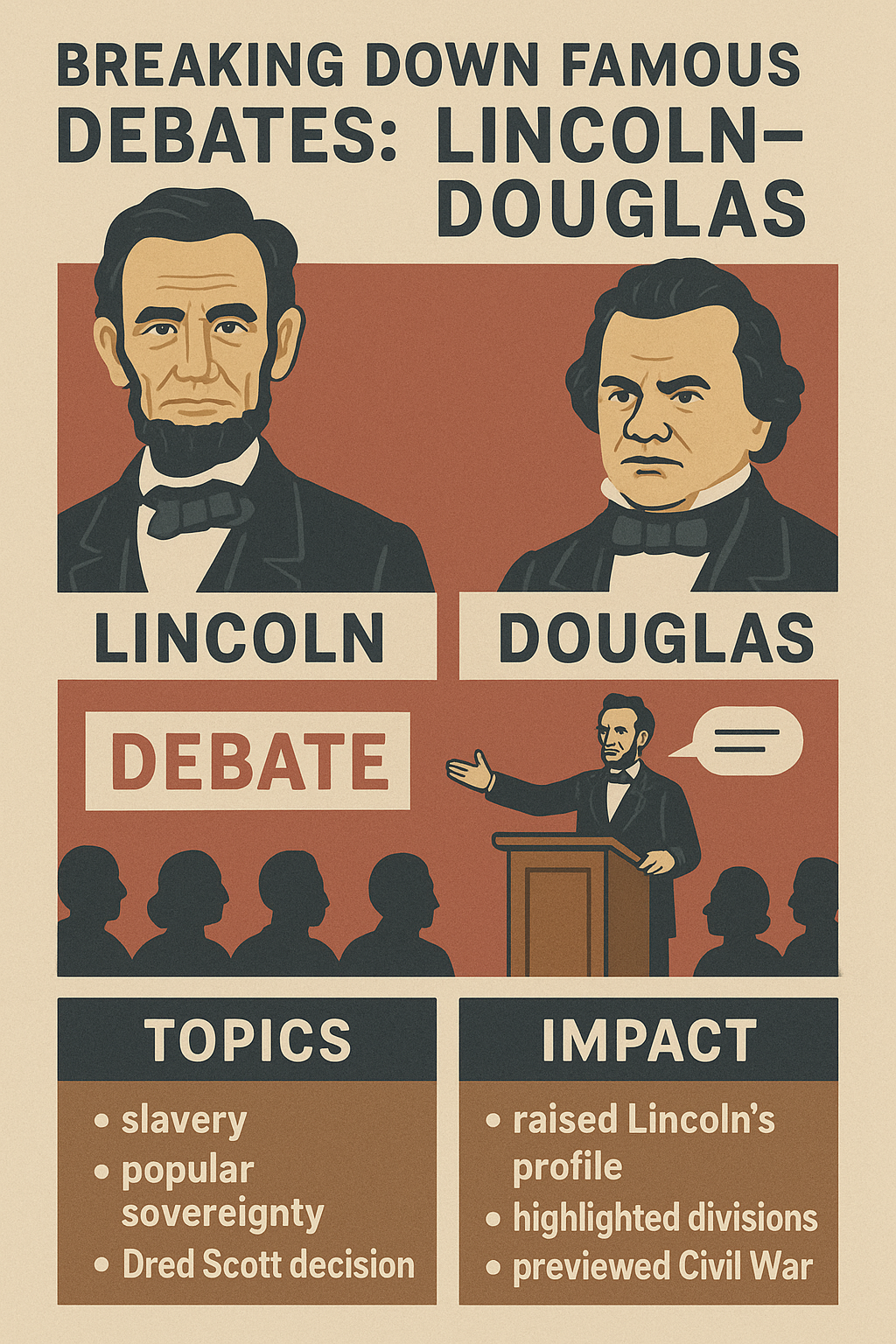
The Lincoln-Douglas debates sit in American history like a row of thunderclaps: loud, electrifying, and reshaping the political sky. These seven encounters between Abraham Lincoln and Stephen A. Douglas in 1858 were more than political sparring matches. They redefined public persuasion, political identity, and the art of debate itself.
If you’re building your skills on Argufight or sharpening your debating instincts anywhere else, there is no better masterclass than this series. This guide unpacks the structure, strategies, rhetorical flourishes, and psychological maneuvering behind these legendary debates.
The Historical Context That Shaped the Debates
Understanding the fire under the floorboards helps explain why these debates mattered so intensely.
The Nation Was Split
Slavery was the earthquake issue. Every line of argument, every appeal to emotion or logic, circled this central fault line.
Media Amplified Every Word
Newspapers transcribed the events widely, which meant every moment was political ammunition.
Stakes Were Existential
Douglas sought to maintain his dominance in Illinois politics. Lincoln sought to shift the national moral compass. Their motivations shaped their styles.
Debate Structure and Why It Still Matters
Each debate followed a strict format:
First speaker: 60 minutes
Second speaker: 90 minutes
First speaker rebuttal: 30 minutes
This structure forced a unique rhythm—long, layered reasoning rather than sound bites.
Lessons for Modern Debaters
Long-form arguments allow deeper logic—weapons against shallow talking points.
Rebuttals matter more than openers; they test adaptability.
A well-built framework beats scattered counterpunches.
Lincoln’s Tactics: Moral Architecture and Intellectual Precision
Lincoln built arguments like stone monuments: deliberate, weighty, and impossible to ignore.
1. Moral Framing
He transformed political disagreement into moral evaluation.
2. Logical Scaffolding
His arguments were step-by-step constructions where each premise reinforced the next.
3. Calm Assertiveness
He rarely raised his voice, weaponizing calmness.
4. Turning Opponent's Words Into Anchors
Lincoln quoted Douglas extensively, using Douglas’s own rhetoric as a burden.
Douglas’s Tactics: Forceful Delivery and Legalistic Precision
Douglas was a firestorm in contrast—fast, sharp, and relentless.
1. Populist Appeal
He aligned himself with local values.
2. Aggressive Reframing
He spun Lincoln’s claims into strategic vulnerabilities.
3. Speed and Volume
His delivery overwhelmed and disoriented opponents.
4. Personalization
He frequently used character attacks masked as political critiques.
Rhetorical Techniques That Defined the Debates
Moral Arguments
Lincoln appealed to shared human values and national identity.
Appeals to Fear and Stability
Douglas warned of instability if Lincoln's ideas prevailed.
Repetition and Reinforcement
Both men used mantra-like lines to lodge concepts in listeners’ minds.
Imagery and Symbolic Language
Each used vivid metaphors to paint the consequences of their opponent's positions.
Key Moments and Turning Points
Freeport Doctrine Trap
Lincoln baited Douglas with a question about popular sovereignty that would haunt Douglas in future national elections.
The Moral High Ground Gambit
Lincoln’s framing of slavery as a moral wrong gave him resonance beyond Illinois.
Douglas’s Counterattacks
Douglas used Lincoln’s previous speeches to portray him as radical and destabilizing.
Each moment reveals how debates hinge on preparation, timing, and psychological pressure.
What Modern Debaters Can Learn
1. Set the Stage
Frame the issue so the debate happens on your terms.
2. Build a Narrative
Both Lincoln and Douglas told stories, not just facts.
3. Anticipate Traps
Debates are full of bait. Learn to recognize and counter it.
4. Control the Emotional Landscape
Calm vs fiery. Moral vs pragmatic. Each style creates a psychological world.
5. Use Long-Form Reasoning
Short debates reward sound bites. Long reasoning wins minds.
Conclusion
The Lincoln-Douglas debates weren’t just historical spectacles. They were laboratories of persuasion where two towering political minds shaped the future of national dialogue. Their tactics, rhythms, and rhetorical choices echo through every serious debate today.
Study them closely and your modern arguments become tighter, deeper, and more commanding.
Related articles
Should College Athletes Receive a Share of Athletic Revenue?
Debate over whether student‑athletes deserve a cut of the billions generated by college sports.
Human vs. Debate AI: Can an Algorithm Truly Judge an Argument?
Debate AI promises speed and objectivity, but can it truly grasp nuance and persuasion? This post explores ArguFight’s algorithm, its strengths, limits, and why a hybrid human‑AI approach may be the future of fair judging.
How to Use Debate AI to Master Rebuttals, Logic, and Persuasion
Learn how to harness ArguFight’s Debate AI to craft razor‑sharp rebuttals, strengthen logical structure, and boost persuasive power. From evidence sourcing to real‑time feedback loops, this guide shows you step‑by‑step techniques for mastering debate.