Can AI Be Truly Objective? Exploring Bias and Fairness in Debate Judging
Examine AI objectivity in debates, exploring bias, fairness, and how Argufight ensures impartial judging using advanced algorithms.
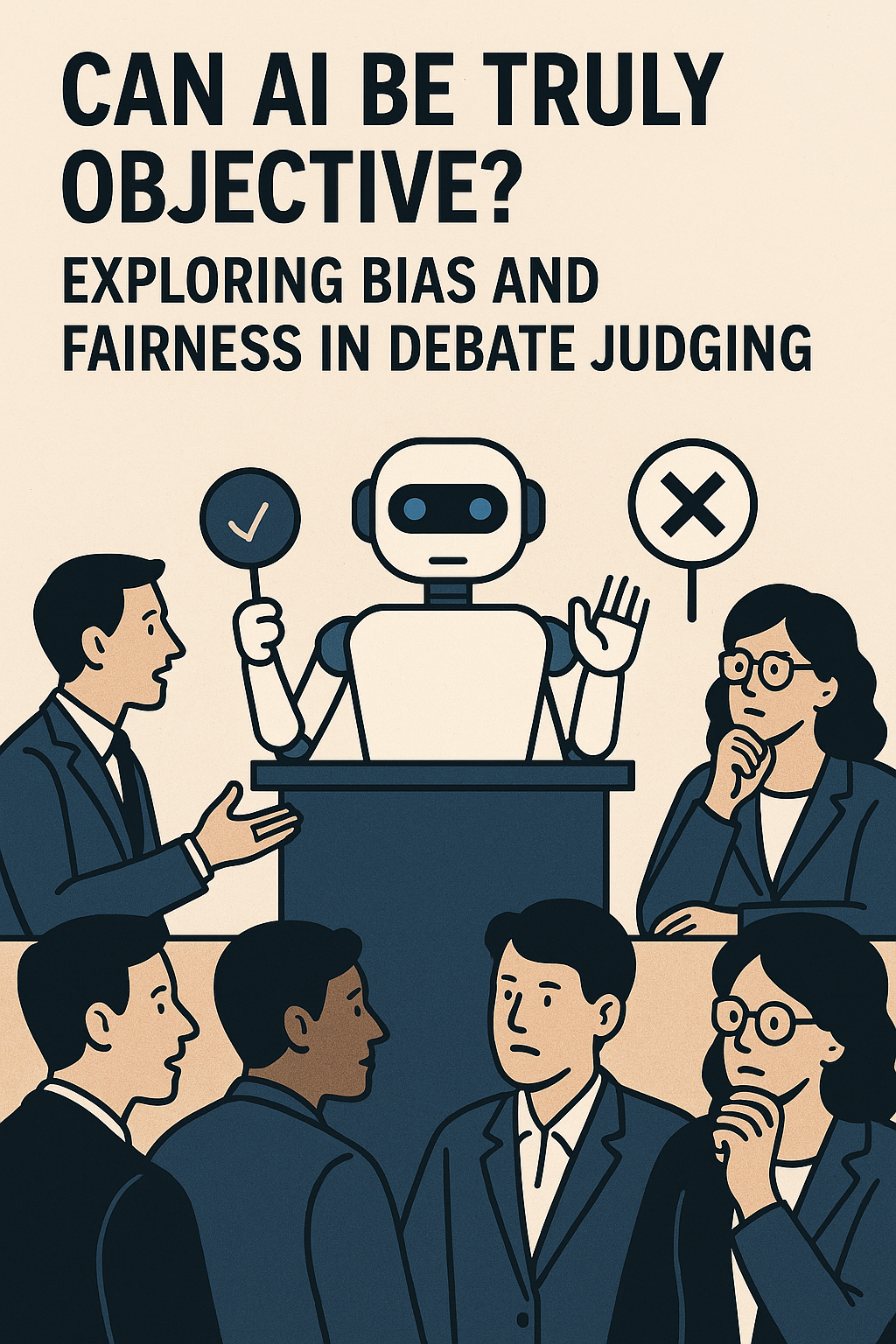
As AI becomes more prevalent in online debate platforms, questions about fairness arise. Can AI truly be objective? This post examines AI objectivity in debates, exploring how AI judges can minimize bias while providing consistent and educational scoring.
What Does Objectivity Mean for AI Judging?
Objectivity refers to evaluating arguments based on content rather than personal or cultural biases. For AI, this involves:
Consistently applying debate rules
Assessing logical coherence and evidence
Avoiding favoritism toward certain participants
True objectivity requires robust algorithms, high-quality training data, and continuous monitoring.
Sources of Potential Bias in AI
1. Training Data Bias
AI models learn from existing human-annotated debates. If the data contains human biases, the AI may inadvertently replicate them.
2. Algorithm Design Bias
Scoring criteria and weightings can introduce bias if not carefully calibrated.
3. Cultural and Linguistic Bias
AI may misinterpret language nuances, humor, or culturally specific references, affecting scores.
How Argufight Ensures AI Objectivity
Diverse Training Data: AI is trained on debates from varied demographics and topics.
Regular Audits: Continuous evaluation of AI scoring patterns to detect and correct bias.
Hybrid Judging Models: Combining AI with human oversight to balance objectivity and nuance.
Transparent Scoring Criteria: Participants can see how points are awarded.
Advantages of AI Objectivity
Eliminates human favoritism or emotional bias.
Provides consistent scoring across thousands of debates.
Enhances fairness in competitive tournaments.
Offers educational feedback based on standardized criteria.
Limitations and Challenges
AI cannot fully grasp creativity, rhetorical flair, or emotional impact.
Misinterpretation of context or slang may affect scores.
Continuous improvements are necessary to maintain fairness.
Tips for Debaters Using AI Judging
Focus on clarity, evidence, and logical structure.
Avoid ambiguous statements that AI might misinterpret.
Learn from AI feedback to refine argumentation skills.
Engage in discussions about scoring criteria to understand evaluation.
Conclusion
While no system is perfect, AI objectivity in debates is achievable through careful design, diverse training, and ongoing monitoring. Argufight’s AI aims to provide fair, consistent, and educational judging, helping debaters focus on improving skills rather than worrying about bias. Understanding the strengths and limits of AI judging allows participants to leverage technology effectively.
Related articles
Should College Athletes Receive a Share of Athletic Revenue?
Debate over whether student‑athletes deserve a cut of the billions generated by college sports.
Human vs. Debate AI: Can an Algorithm Truly Judge an Argument?
Debate AI promises speed and objectivity, but can it truly grasp nuance and persuasion? This post explores ArguFight’s algorithm, its strengths, limits, and why a hybrid human‑AI approach may be the future of fair judging.
How to Use Debate AI to Master Rebuttals, Logic, and Persuasion
Learn how to harness ArguFight’s Debate AI to craft razor‑sharp rebuttals, strengthen logical structure, and boost persuasive power. From evidence sourcing to real‑time feedback loops, this guide shows you step‑by‑step techniques for mastering debate.