Debate Skills for College Applications: How Argumentation Boosts Your Profile
Discover how debate and argumentation skills provide a powerful edge in college admissions. Learn to showcase critical thinking, structured communication, and intellectual empathy to transform your application from a list of grades into a compelling narrative of readiness for higher learning.
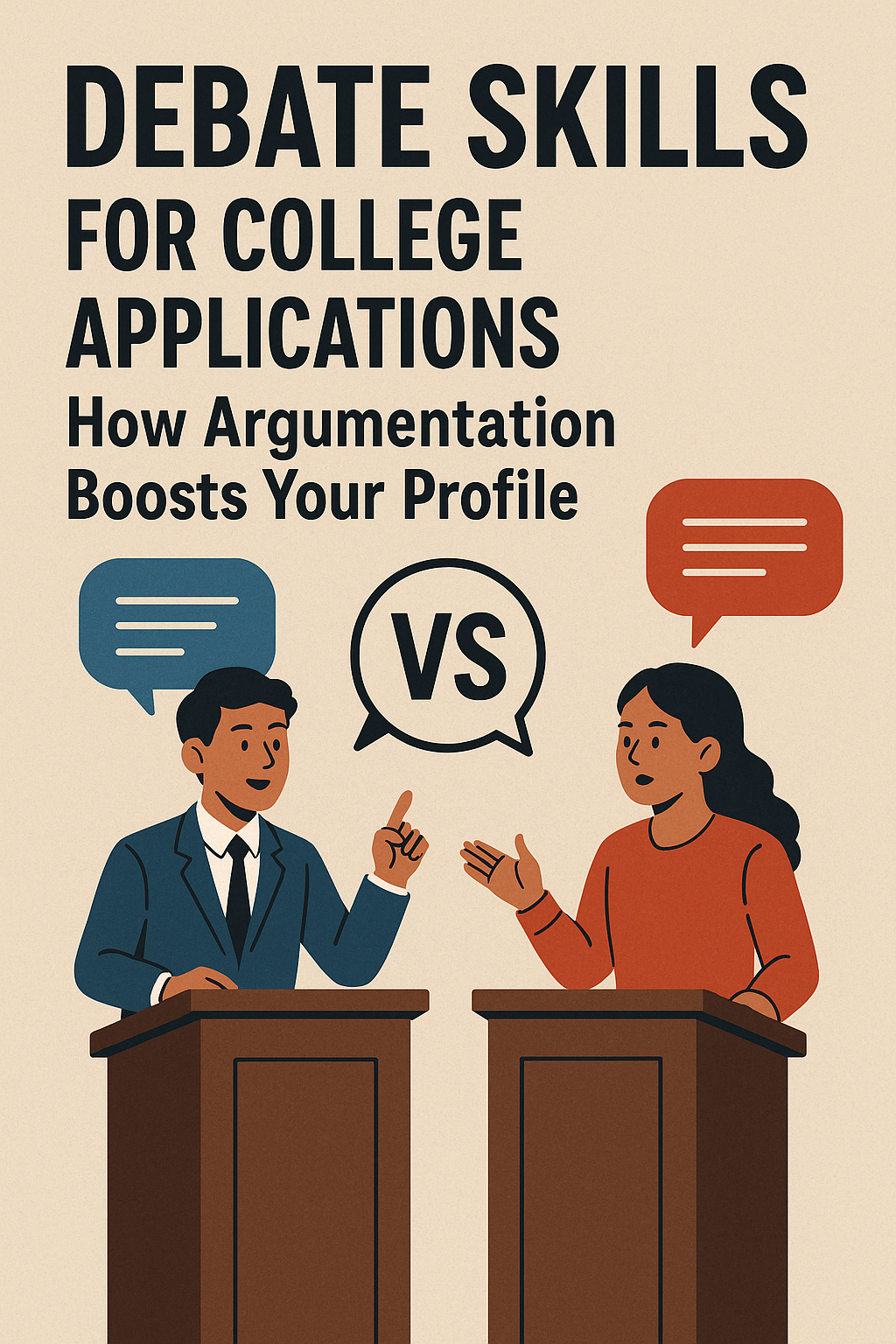
Beyond the GPA: The Unseen Edge in College Admissions
In the high-stakes arena of college applications, thousands of brilliant students present near-perfect GPAs and impressive test scores. So, how do you stand out? The answer might surprise you: it's not just what you know, but how you think. Developing strong debate and argumentation skills can transform your application from a list of achievements into a compelling narrative of intellectual vitality and leadership.
Why Admissions Officers Value Argumentation
Top-tier universities aren't just looking for students who can absorb information; they're seeking the next generation of innovators, problem-solvers, and engaged citizens. The ability to construct a logical argument, consider multiple perspectives, and communicate persuasively is fundamental to this mission. A Harvard Business Review article on critical thinking emphasizes these skills as core to leadership development. When you showcase debate experience, you signal that you're ready to contribute meaningfully to classroom discussions, research projects, and campus discourse from day one.
Key Debate Skills That Shine on Applications
Let's break down the specific competencies you develop through argumentation and how they translate to your college profile:
Critical Analysis: Debaters learn to dissect complex issues, identify underlying assumptions, and evaluate evidence. This mirrors the rigorous analysis required in college-level humanities, social sciences, and STEM research.
Structured Communication: Crafting a coherent argument with a clear thesis, supporting points, and a conclusion is the blueprint for exceptional college essays and interview responses.
Empathetic Listening & Rebuttal: True debate isn't about shouting louder; it's about understanding an opponent's position to formulate a nuanced counter-argument. This demonstrates maturity, intellectual flexibility, and respect for diverse viewpoints—qualities every campus community cherishes.
Poise Under Pressure: Thinking on your feet during a rebuttal or cross-examination builds confidence and composure, directly preparing you for college interviews and high-stakes presentations.
Showcasing Your Skills: From Activity List to Personal Essay
You don't need to be a national debate champion to benefit. Here’s how to weave argumentation into every part of your application:
1. The Activities Section
List your debate club, Model UN, or speech participation. But go beyond the title. Quantify your impact and growth. For example: "Captain of Debate Team; led weekly research sessions for novices; improved team's win rate by 30%." Even informal practice, like structured debates on platforms like ArguFight, can be framed as a self-directed pursuit of rhetorical skill.
2. The Personal Essay and Supplements
This is your prime canvas. Instead of just stating you're a debater, show it. Write about a time you changed your mind mid-argument, how preparing a case on a difficult topic opened your eyes, or how losing a debate taught you more than winning ever could. This demonstrates reflection, growth, and genuine intellectual curiosity.
3. Letters of Recommendation
Ask a coach, advisor, or teacher who has seen you develop these skills. They can provide powerful third-party validation of your ability to research thoroughly, argue ethically, and collaborate with peers—even opponents.
4. Interviews
When asked about a controversial issue or your opinion on a topic, use your debate training. Acknowledge the complexity, present a balanced view with clear reasoning, and be prepared to engage in a thoughtful back-and-forth. This turns a simple Q&A into a memorable demonstration of your collegiate readiness.
Building Your Skills with ArguFight
Formal debate programs aren't accessible to everyone. That's where ArguFight comes in. Our AI-judged platform provides a low-pressure, always-available environment to hone the exact skills admissions officers look for.
Practice Critical Thinking: Engage in structured debates on topics from ethics to technology. The AI feedback helps you identify logical fallacies and strengthen your evidence.
Develop a Unique Angle: Exploring niche topics on our platform can help you discover a genuine passion or perspective to write about in your essays.
Build Confidence: Regular practice articulating and defending your views will make you more articulate and self-assured in every setting, especially interviews.
Research, such as that highlighted by the Stanford Encyclopedia of Philosophy's entry on critical thinking, underscores that these skills are teachable and measurable. Platforms like ours make that training interactive and accessible.
The Final Argument: Your Conclusion
In a crowded field of applicants, your ability to think and argue effectively is a powerful differentiator. It tells a story of engagement, resilience, and preparedness that goes far beyond a transcript. By cultivating and showcasing your debate skills, you're not just applying to college—you're demonstrating that you're ready to thrive there.
Ready to put these skills into practice and build a profile that stands out? The best way to learn is by doing. Join ArguFight today, choose a topic that sparks your passion, and start your first debate. You'll sharpen your mind for the challenges ahead—and might just discover the perfect anecdote for your personal statement. For more insights on crafting winning arguments, read more articles on our blog.
Related articles
Should College Athletes Receive a Share of Athletic Revenue?
Debate over whether student‑athletes deserve a cut of the billions generated by college sports.
Human vs. Debate AI: Can an Algorithm Truly Judge an Argument?
Debate AI promises speed and objectivity, but can it truly grasp nuance and persuasion? This post explores ArguFight’s algorithm, its strengths, limits, and why a hybrid human‑AI approach may be the future of fair judging.
How to Use Debate AI to Master Rebuttals, Logic, and Persuasion
Learn how to harness ArguFight’s Debate AI to craft razor‑sharp rebuttals, strengthen logical structure, and boost persuasive power. From evidence sourcing to real‑time feedback loops, this guide shows you step‑by‑step techniques for mastering debate.