How to Counter the Socratic Method
Learn strategies to counter the Socratic Method in debates. Stop being cornered by questions and take back control of the argument.
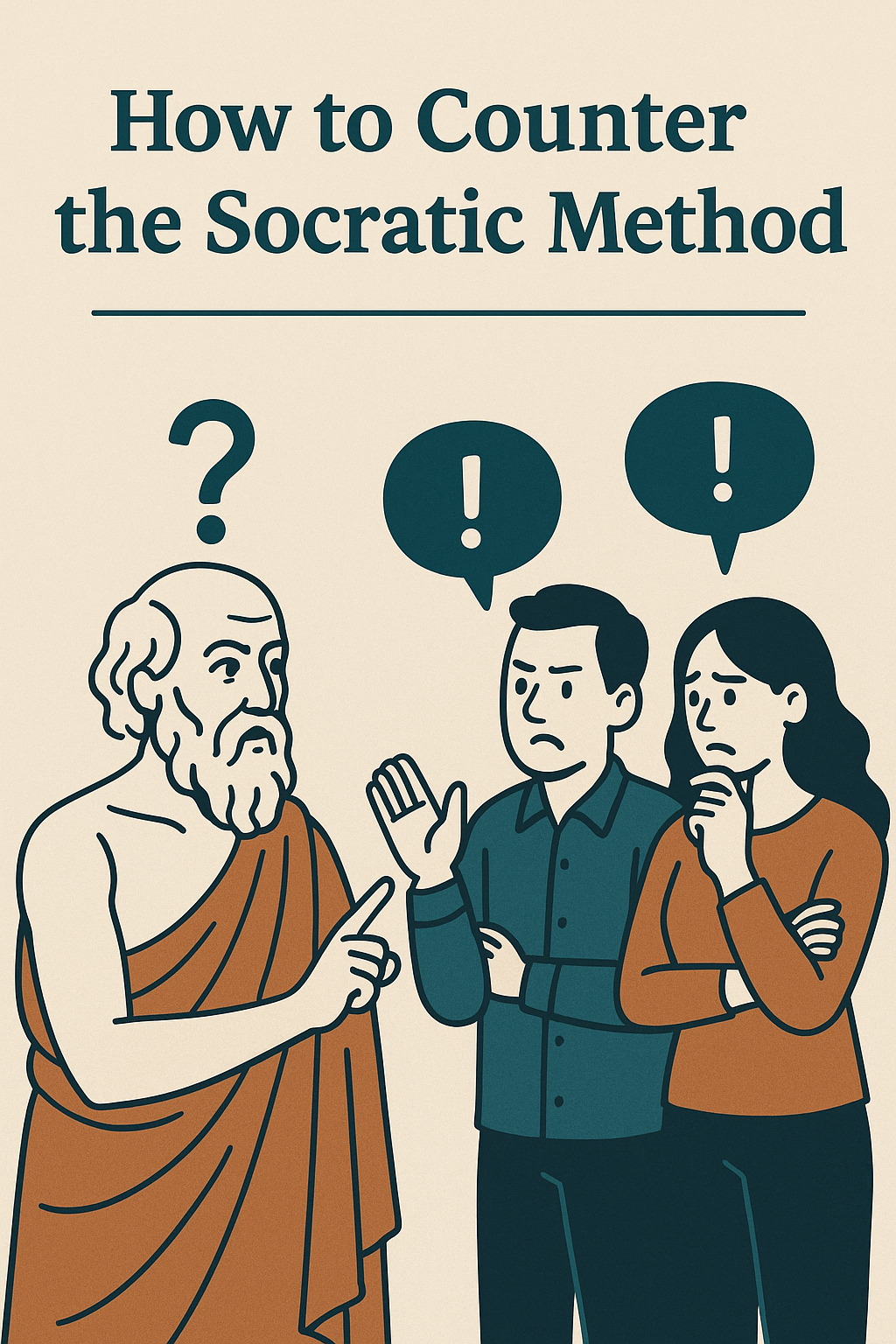
The Socratic Method is one of the oldest and most effective debate tools ever created. It’s designed to expose contradictions, reveal assumptions, and lead you—step-by-step—to your opponent’s conclusion.
When used skillfully, it can make even confident debaters feel trapped.
But there’s good news: once you understand how the method works, you can easily counter it.
This guide teaches you how to recognize Socratic questioning, stop getting boxed in, and regain control of any debate—whether you're on ArguFight, in a classroom, or in a live discussion.
What Is the Socratic Method?
The Socratic Method uses a series of leading questions to:
expose contradictions
challenge assumptions
force the opponent into narrow commitments
guide them toward a conclusion
Example:
"Do you believe freedom is important?" → “Do restrictions reduce freedom?” → “So isn’t regulation a threat to freedom?”
The power isn’t in the questions—it’s in the trap of agreeing too quickly.
Why the Socratic Method Works So Well
It forces you into yes/no responses.
It makes you defend assumptions you didn’t realize you made.
It gives the questioner control over the flow of the argument.
It appears intellectually superior, making resistance feel like evasion.
But with the right techniques, you can level the playing field.
1. Refuse Unfair Yes/No Traps
You are never obligated to answer a question in the format your opponent demands.
Response strategy:
"That question oversimplifies the issue. I’ll answer after reframing it properly."
Alternative:
"A yes/no answer would be misleading. Here’s the accurate explanation…"
This instantly breaks the questioner’s control.
2. Identify the Hidden Assumption
Almost every Socratic question carries an unspoken assumption.
Example:
"Isn’t regulation a restriction of freedom?"
Hidden assumption: All restrictions are harmful.
Counter:
"Not all restrictions reduce meaningful freedom. Some enhance it—like laws against theft."
Once you reveal the assumption, their chain collapses.
3. Ask Clarifying Questions Back
Fight questions with questions.
Examples:
“What definition of freedom are you using?”
“Before I answer, what conclusion are you trying to reach?”
“Can you explain how this question relates to the main topic?”
Suddenly, you take control.
4. Slow the Tempo of the Questioning
The Socratic Method relies on rapid-fire questioning.
Counter strategy: Pause.
Take your time.
Deliberate.
Example:
"Let me think about that for a moment."
"I want to make sure I understand the implication of your question."
Slowing the pace disrupts their momentum.
5. Don’t Commit Too Early
If each question feels harmless, you're being led into a trap.
Example Socratic chain:
"Do you support freedom?" → Everyone says yes.
"Are restrictions limits on freedom?" → Feels safe.
"So you oppose restrictions?" → Now you're boxed in.
Counter:
"These questions are connected in ways that require more nuance. I’ll address them together after hearing your full argument."
This breaks the chain entirely.
6. Reframe the Entire Discussion
Sometimes the best counter is a full reset.
Example:
"Instead of going through questions one by one, let’s address the core issue directly: whether regulation helps or harms society."
This shifts power back to you.
7. Expose the Method Itself
The Socratic Method loses power once it becomes visible.
Example:
"You’re using a series of leading questions to guide me toward a predetermined conclusion. Let’s discuss the conclusion directly instead."
This removes the psychological pressure.
8. Provide Conditional or Partial Answers
Not every answer must be absolute.
Examples:
"In some cases yes, in others no."
"It depends on the context."
"Before I answer, we need to define our terms."
Conditional answers block the chain logic the method relies on.
9. Keep Bringing the Debate Back to Evidence
The Socratic Method is about logic chains, not evidence.
Shift the burden:
"Before answering hypotheticals, can you provide evidence supporting your claim?"
Evidence-based debates are harder to manipulate.
10. Use the Method Against Them
You can flip the script.
Examples:
“Why do you assume that follows?”
“What evidence supports that?”
“Are you certain the premise is sound?”
“Does your conclusion still hold if this exception exists…?”
Turning their method around destabilizes their strategy.
Conclusion
The Socratic Method is powerful—but only when you don’t know how it works. Once you learn to identify its patterns, expose hidden assumptions, refuse boxed-in choices, and redirect the flow, you can counter it with ease.
Use these tactics in your next online debate on ArguFight, and you’ll never be cornered by rapid-fire questioning again.
Related articles
Should College Athletes Receive a Share of Athletic Revenue?
Debate over whether student‑athletes deserve a cut of the billions generated by college sports.
Human vs. Debate AI: Can an Algorithm Truly Judge an Argument?
Debate AI promises speed and objectivity, but can it truly grasp nuance and persuasion? This post explores ArguFight’s algorithm, its strengths, limits, and why a hybrid human‑AI approach may be the future of fair judging.
How to Use Debate AI to Master Rebuttals, Logic, and Persuasion
Learn how to harness ArguFight’s Debate AI to craft razor‑sharp rebuttals, strengthen logical structure, and boost persuasive power. From evidence sourcing to real‑time feedback loops, this guide shows you step‑by‑step techniques for mastering debate.