The Best Arguments in History: A Deep Look at Humanity’s Sharpest Thinking
Explore the best arguments in history, from ancient philosophy to modern politics, and learn what makes them powerful, memorable, and persuasive.
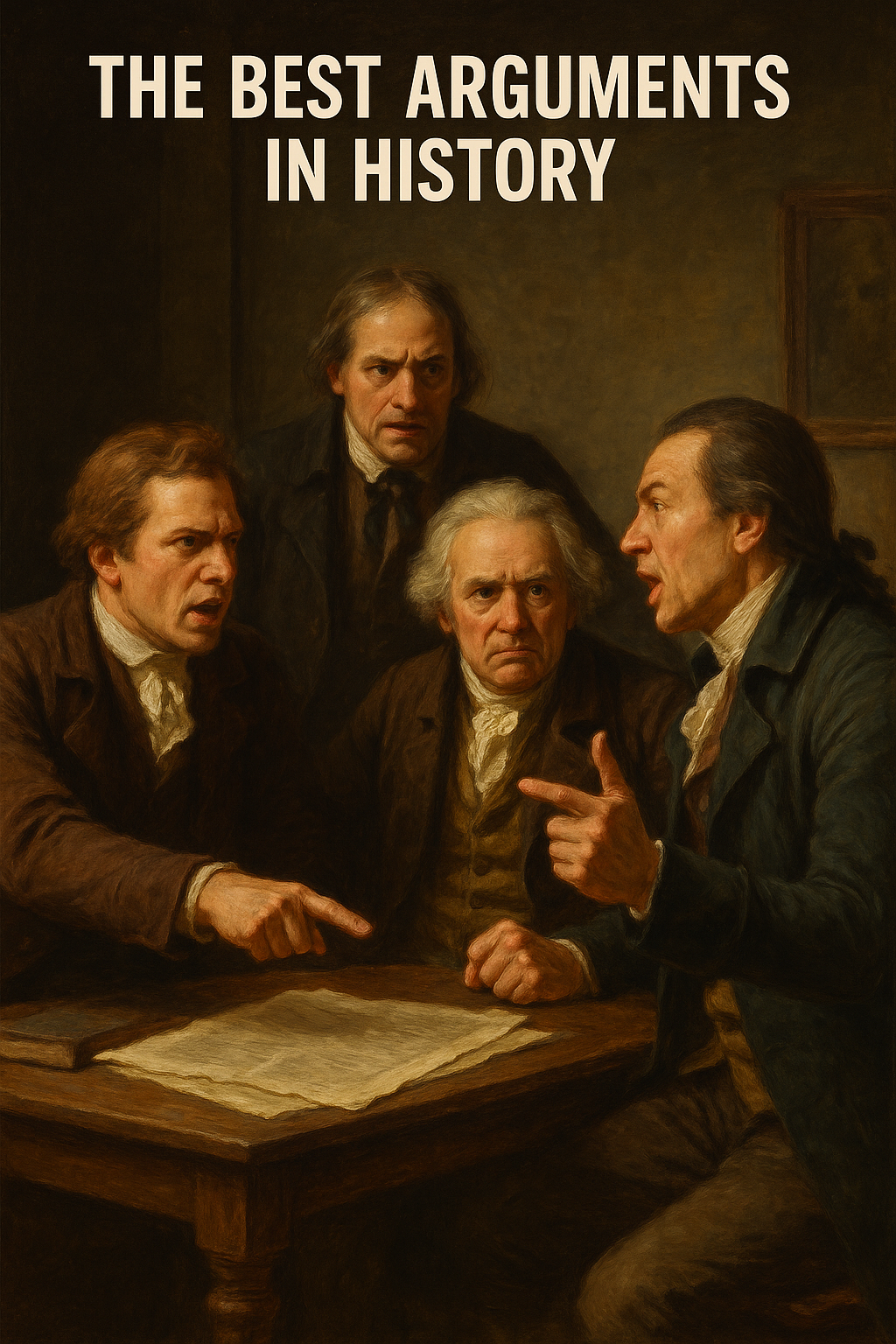
Across centuries, the world has been shaped not just by battles or inventions, but by arguments. Words have rearranged empires, redirected moral compasses, and carved new paths for civilization. Some arguments were delivered in hushed rooms. Others echoed through courts, parliaments, and public squares. All of them carried an energy that pushed societies into new chapters.
This guide takes you on a journey through the best arguments in history and the techniques that made them unforgettable. If you want to refine your own debating instincts on Argufight or any modern arena, these historical masterworks offer a trove of inspiration.
What Makes an Argument “One of the Best”?
Arguments that endure through time usually share traits that make them powerful.
1. Conceptual clarity
Great arguments feel like polished gemstones: precise, multifaceted, and sturdy.
2. Emotional force
Logic alone rarely moves societies. The best arguments stir purpose.
3. Real-world consequences
We're looking at arguments that changed laws, philosophies, scientific paradigms, and global structures.
4. Memorable framing
They are structured in ways that stick in the public imagination.
Socrates and the Birth of Rational Inquiry
Socrates reshaped how humans think. He didn’t give answers as much as he unraveled assumptions.
Core Argument:
An unexamined belief is a brittle belief.
Why It Endures:
It forces self-reflection.
It encourages truth through questioning.
It became the blueprint for Western philosophy.
Debate Lesson:
Knowing how to question effectively is more powerful than delivering a rehearsed speech.
Aristotle’s Defense of Logic
Aristotle formalized logic itself. His arguments on deductive reasoning created the scaffolding for future debate.
Core Argument:
Truth emerges by understanding the relationship between premises and conclusions.
Why It Endures:
It invented structured reasoning.
It standardized rational debate.
Debate Lesson:
A solid argument is a chain. Each link must be strong.
Cicero’s Arguments for the Republic
Cicero’s speeches echoed through the Roman Senate with a kind of oratorical thunder.
Core Argument:
Political stability relies on justice, virtue, and shared institutions.
Why It Endures:
It blends philosophy with political realism.
It champions the rule of law.
Debate Lesson:
Precision plus elegance equals impact.
Thomas Aquinas and Reasoned Faith
Aquinas used logic to support theology, merging rational philosophy with religious doctrine.
Core Argument:
Faith and reason reinforce each other rather than contradict.
Why It Endures:
It shaped centuries of ethical and theological debate.
Debate Lesson:
Bridging opposing frameworks can create powerful harmony.
Galileo’s Defense of Heliocentrism
Galileo fought both tradition and institutional power.
Core Argument:
Evidence outweighs inherited belief.
Why It Endures:
It championed the scientific method.
It highlighted the clash between observation and authority.
Debate Lesson:
Data doesn’t shout, but it wins.
Frederick Douglass and the Humanity Argument
Douglass wielded an unmatched blend of personal testimony, moral force, and razor-sharp logic.
Core Argument:
Freedom is a human right, and slavery violates the core of moral and civic order.
Why It Endures:
It changed public perception.
It blended intellect with lived reality.
Debate Lesson:
Authentic experience can vault an argument beyond theory.
Mary Wollstonecraft and the Case for Women’s Rights
Wollstonecraft’s work carved pathways into equality discourse.
Core Argument:
Women deserve education, agency, and civic participation because equality strengthens society.
Why It Endures:
It laid early groundwork for feminist philosophy.
Debate Lesson:
A well-reasoned argument can outpace the culture that resists it.
Martin Luther King Jr. and the Moral Imperative of Justice
King’s arguments shimmer with clarity, compassion, and inevitability.
Core Argument:
Justice delayed is justice denied.
Why It Endures:
It fused ethical clarity with strategic activism.
Debate Lesson:
When moral force meets rhetorical beauty, audiences don’t just understand—they feel.
Karl Popper and the Logic of Scientific Progress
Popper elevated the conversation about what counts as science.
Core Argument:
Theories must be falsifiable to be meaningful.
Why It Endures:
It made skepticism a constructive tool.
Debate Lesson:
Your argument becomes stronger the moment you expose it to possible failure.
Modern Examples: Arguments That Shaped Today’s World
The Case for the Internet (Tim Berners-Lee)
A push for open access, decentralization, and shared information.
The Case for Climate Action
Global scientific consensus emphasizing responsibility and risk.
The Case for Universal Human Rights
A blend of moral philosophy, legal reasoning, and historical memory.
Each of these modern arguments carries the same DNA as ancient ones: clarity, vision, and a bold claim about the future.
What You Can Learn From These Arguments
1. Build a moral spine
Arguments without values evaporate.
2. Use logic as your compass
A clear structure strengthens every claim.
3. Invite challenge
Great arguments welcome scrutiny.
4. Tell a story
Narrative binds facts into meaning.
5. Marry emotion with reason
The strongest arguments speak to both the mind and the pulse.
Conclusion
The best arguments in history didn’t just persuade audiences—they reshaped the world. Each one reflects a unique fusion of courage, clarity, creativity, and conviction. When you absorb their lessons, your own debates become richer, wiser, and more effective.
Carry these insights into your next confrontation on Argufight or beyond, and you’ll be tapping into a lineage of thinkers who shaped civilization with nothing more than sharpened thought.
Related articles
Should College Athletes Receive a Share of Athletic Revenue?
Debate over whether student‑athletes deserve a cut of the billions generated by college sports.
Human vs. Debate AI: Can an Algorithm Truly Judge an Argument?
Debate AI promises speed and objectivity, but can it truly grasp nuance and persuasion? This post explores ArguFight’s algorithm, its strengths, limits, and why a hybrid human‑AI approach may be the future of fair judging.
How to Use Debate AI to Master Rebuttals, Logic, and Persuasion
Learn how to harness ArguFight’s Debate AI to craft razor‑sharp rebuttals, strengthen logical structure, and boost persuasive power. From evidence sourcing to real‑time feedback loops, this guide shows you step‑by‑step techniques for mastering debate.