The Future of AI in Education: Transforming Learning and Assessment
Artificial Intelligence is poised to revolutionize education by creating personalized learning pathways for every student and transforming archaic assessment models. But this shift raises critical questions about equity, bias, and the irreplaceable role of human teachers. Explore the promises and perils of the AI-powered classroom.
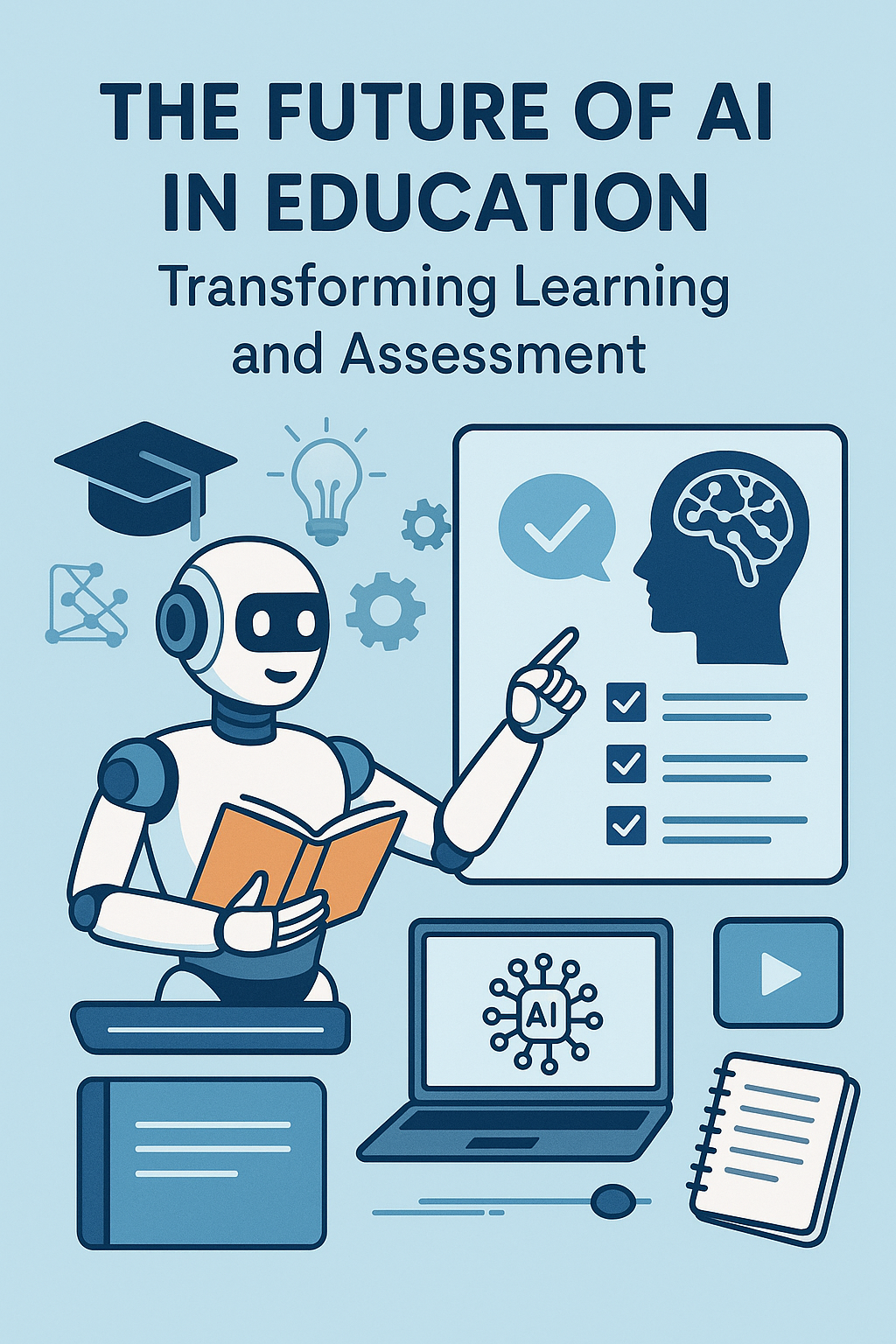
From Chalkboards to Chatbots: The AI Revolution in the Classroom
For centuries, the fundamental model of education remained remarkably static: a teacher, a room of students, and a standardized curriculum. Today, that model is undergoing its most profound transformation, driven by the relentless advance of Artificial Intelligence. AI in education is no longer a futuristic concept; it's an active, evolving reality that promises to personalize learning, automate administrative burdens, and fundamentally reshape how we assess knowledge and skills. This shift isn't about replacing teachers but empowering them—and their students—with tools that adapt to individual needs and unlock new potentials.
Personalized Learning Pathways: A Tutor for Every Student
The most significant promise of AI lies in its ability to dismantle the "one-size-fits-all" approach. Imagine a learning platform that understands a student's unique strengths, knowledge gaps, and optimal pace.
Adaptive Learning Systems
AI-powered platforms can analyze a student's interactions—how long they take on a problem, where they hesitate, which concepts they master quickly—and dynamically adjust the curriculum. If a student excels at algebra but struggles with geometry, the system can provide additional practice, alternative explanations, or even different media formats (like a video instead of text) to bridge the gap. This creates a truly customized educational journey for every learner.
Intelligent Tutoring Systems (ITS)
Going beyond simple adaptation, ITS act as virtual tutors. They can engage in dialogue, answer questions in natural language, provide step-by-step guidance on complex problems, and offer immediate, formative feedback. This 24/7 support system ensures help is always available, reducing frustration and building student confidence. For a deeper dive into how these systems are being researched and developed, you can explore resources like the Wikipedia entry on Intelligent Tutoring Systems.
Redefining Assessment: Beyond the Standardized Test
If learning becomes personalized, our century-old assessment models must evolve in tandem. AI is moving us from high-stakes, snapshot testing to continuous, holistic evaluation.
Formative and Automated Feedback
AI can grade structured assignments (like multiple choice or fill-in-the-blank) instantly, freeing teachers for more meaningful interactions. More impressively, it's making strides in evaluating open-ended responses, essays, and even creative projects by analyzing argument structure, factual accuracy, and coherence. This allows for feedback loops that are immediate and specific, turning every assignment into a learning opportunity.
Competency and Skill-Based Evaluation
Future AI systems will likely assess a broader spectrum of skills. By analyzing project portfolios, presentation recordings, or collaborative problem-solving sessions in digital environments, AI can evaluate critical thinking, creativity, collaboration, and communication—the skills most valued in the modern workforce. This shift from judging memorized facts to demonstrating applied competency is a monumental change.
The Challenges and Ethical Considerations
This transformative power does not come without significant questions and concerns that demand careful navigation.
Data Privacy and Security: AI systems require vast amounts of student data. Ensuring this data is anonymized, secure, and used ethically is paramount.
Algorithmic Bias: AI models trained on biased data can perpetuate and even amplify societal inequalities. Continuous auditing for fairness is non-negotiable.
The Human Element: Education is inherently relational. The role of the teacher must evolve into that of a mentor, facilitator, and guide who uses AI insights to strengthen human connection, not replace it.
Access and Equity: There's a real risk of a "digital divide" widening if AI tools are only available to well-funded schools. Equitable access must be a core goal.
A UNESCO report on AI in education highlights the global imperative to steer this technology with humanistic values at its core.
The Future Classroom: A Collaborative Ecosystem
The ultimate vision is a synergistic ecosystem where AI handles administrative tasks (grading, scheduling), provides deep learning analytics, and offers personalized practice, while teachers focus on fostering curiosity, emotional intelligence, and complex discussion. Students will learn to work with AI as a tool, critically evaluating its outputs and using it to enhance their own creativity and problem-solving.
What Do You Think?
The integration of AI into education is one of the most critical debates of our time. Will it lead to a more equitable and effective system, or will it create new forms of dependency and inequality? Is automated assessment a fair measure of human potential?
These questions are perfect for spirited, structured debate. We encourage you to join ArguFight and start or participate in a debate on this very topic. You can explore existing debates on technology and education to see what others are saying. Sharpen your arguments, because the future of learning isn't just something to read about—it's something to actively discuss and shape.
Ready to engage? Start a debate on "The Ethics of AI Grading" or "Personalized AI vs. Standardized Curriculum" today and see how your perspectives hold up under scrutiny. For more thought-provoking content, read more articles on our blog.
Related articles
Should College Athletes Receive a Share of Athletic Revenue?
Debate over whether student‑athletes deserve a cut of the billions generated by college sports.
Human vs. Debate AI: Can an Algorithm Truly Judge an Argument?
Debate AI promises speed and objectivity, but can it truly grasp nuance and persuasion? This post explores ArguFight’s algorithm, its strengths, limits, and why a hybrid human‑AI approach may be the future of fair judging.
How to Use Debate AI to Master Rebuttals, Logic, and Persuasion
Learn how to harness ArguFight’s Debate AI to craft razor‑sharp rebuttals, strengthen logical structure, and boost persuasive power. From evidence sourcing to real‑time feedback loops, this guide shows you step‑by‑step techniques for mastering debate.